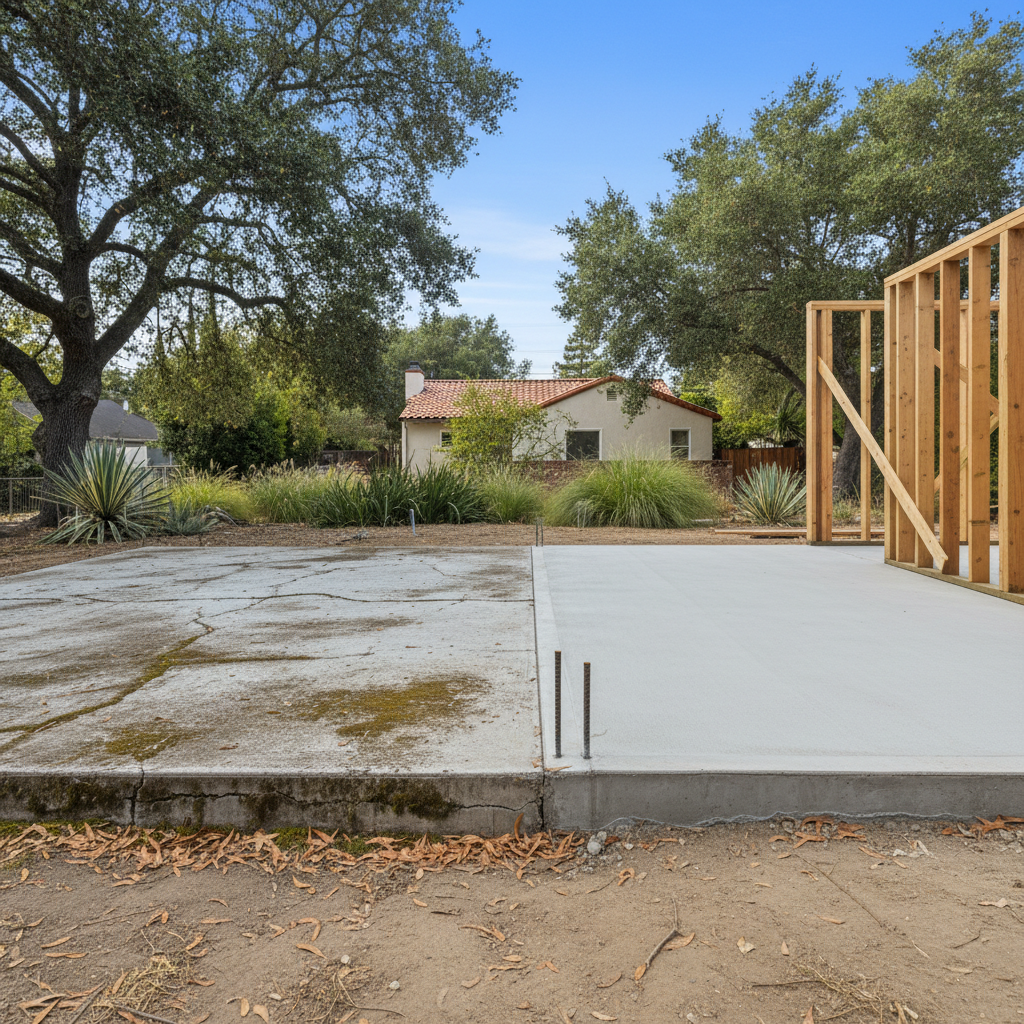
So, you're building a new home or tackling a big remodel right here in Palo Alto. One of the first major decisions you'll bump into? The foundation. I know, it's not exactly thrilling, but it's literally what your entire house rests on. Mess this up, and you'll be kicking yourself for decades. We're talking about choosing between a slab-on-grade foundation and a raised foundation with a crawl space. Both have their place, but for folks in our area, one usually just makes more sense.
Slab-on-Grade: The Modern Approach
A slab-on-grade foundation is pretty much what it sounds like: a thick, reinforced concrete slab poured directly onto the ground. Picture a giant, flat concrete cookie that your house sits on. It's super common in newer builds, especially where the ground is stable and seismic activity is a worry – which, let's be honest, describes us perfectly.
The Good Stuff About Slabs:
Cost: Generally, slabs are cheaper to put in upfront. There's less digging, less material (no joists, beams, or subfloor structure underneath), and often less labor compared to a crawl space.
Speed: They're quicker to pour and cure. That can actually shave a little time off your construction schedule.
Energy Efficiency: A slab can hold onto heat better, meaning it absorbs and releases warmth slowly. This can help with heating and cooling bills if it's designed correctly. Plus, no air sneaking in from a crawl space means a tighter, more efficient house.
Pest Resistance: No dark, damp crawl space? Fewer places for rodents, bugs, or other critters to move in under your home. That's a win, right?
Accessibility: For anyone with mobility issues, a slab means no steps up into the house, making it easier to get around.
The Not-So-Good Stuff About Slabs:
Plumbing Nightmares: This is the big one. If you get a plumbing leak under a slab, fixing it is a huge job. We're talking jackhammering concrete, digging, repairing, then patching it all back up. It's messy, expensive, and a real disruption.
No Easy Access for Utilities: Running new wiring, pipes, or ducts later on is much harder. Everything has to go through walls or the attic, or you're cutting into the slab itself.
Harder on the Body: Standing on concrete floors all day can be tough on your joints. You'll definitely want good flooring and maybe some comfy rugs.
Moisture Issues: While they're less likely to get generally damp, if the vapor barrier isn't perfect or gets damaged, a slab can still pull moisture up from the ground. This often leads to problems with your flooring.
Raised Foundation with Crawl Space: The Traditional Choice
A raised foundation, or crawl space foundation, uses concrete footings and a perimeter stem wall. The house structure then gets built above the ground on a series of girders and floor joists. This creates a gap, usually 18 inches to 3 feet high, between the ground and the underside of your first floor.
Why People Love Crawl Spaces:
Easy Access to Utilities: This is honestly the main reason I suggest them for most Palo Alto Custom Homes projects. If a pipe bursts, or you want to add a new electrical line, or even upgrade your HVAC ducts, it's pretty simple to get into the crawl space and do the work. This saves you a ton of headaches and money down the road.
Flexibility for Remodels: Thinking about moving a wall? Need to re-route something? A crawl space just gives you options that a slab doesn't.
Warmer Floors: Wood subfloors and flooring often feel warmer underfoot than concrete, especially during winter.
Drainage: If your lot is sloped or you've got potential water issues, a raised foundation keeps your main living space literally above it all. Here in Palo Alto, particularly in areas with clay soils that can hold water, this can be a huge plus.
Aesthetics: Some folks just prefer the look of a home that's slightly elevated off the ground. It can give a house a more substantial, classic feel.
The Downsides of Crawl Spaces:
Higher Upfront Cost: More digging, more concrete for footings and walls, more lumber for joists and subfloor – it all adds up. It's typically more expensive to build than a slab.
Pest Potential: A dark, protected space can be an open invitation for pests if it's not properly sealed and maintained. Good ventilation and regular checks are absolutely key.
Moisture Management: Crawl spaces need good ventilation and a proper vapor barrier on the ground. This prevents moisture buildup, mold, and mildew. An encapsulated crawl space (sealed and conditioned) is a fantastic solution, but yes, it does add to the cost.
Energy Efficiency: If they aren't properly insulated and sealed, crawl spaces can cause heat loss or gain, impacting your energy bills.
My Recommendation for Palo Alto Homeowners
For most homeowners in Palo Alto – especially when you're building a custom home or doing a big renovation – I usually lean towards a raised foundation with a crawl space. Sure, it costs a little more upfront, but the long-term benefits, especially how easy it makes future repairs and modifications, really outweigh that initial expense.
Think about it: our homes are always changing. Technology evolves, family needs shift, and things just break sometimes. Having that accessible space under your house means you won't have to rip up your gorgeous new flooring if a drain line needs attention or you decide to add smart home wiring years down the road. It's an investment in your home's future flexibility and how easy it will be to maintain.
We've seen countless times where a homeowner with a slab-on-grade foundation faces a five-figure repair for a simple plumbing issue. That same problem would have been a fraction of the cost in a crawl space. When you're building a quality home you plan to live in for a long time, that access is truly invaluable. It just gives you a little extra breathing room, doesn't it?
No matter which you choose, make sure your contractor really knows the local conditions. We've got expansive clay soils in some parts of Palo Alto, which means proper engineering and drainage are non-negotiable for any foundation type. Don't skimp on the foundation; it's literally the bedrock of your home's value and how long it will last.